Accounting for Utility-Scale Clean Energy Storage
Developments in energy storage technology have recently made possible long-term bulk storage of electricity, holding out promise for substantial load shifting and the enhanced grid flexibility required to see variable resources like solar and wind become the dominant sources of power in a decarbonized economy. While Energy Attribute Certificates (EACs) have become the established accounting instruments for electrical energy over the last 20 years, there is still no standardized practice for using EACs to account for stored renewable electricity and even less agreement on how to use EAC’s to account for non-renewable sources of clean electricity, outside of all-generation tracking systems. Lack of clear guidance creates a barrier for an emerging class of large-scale electricity consumers like data centers, electrolytic hydrogen producers, and customers interested in 24/7 matching of clean power to hourly demand, who are looking to align with carbon-accounting standards that recognize clean energy procurement. This CEAP initiative will consider market dynamics and procurement practices in the real-world to explore outstanding issues in tracking and accounting of clean energy stored at utility-scale volumes using new innovations in battery, pumped hydro, compressed air, fly wheel and thermal storage technologies. The initiative will develop recommendations for issuing and retiring EACs, allocating attributes of stored clean electricity from charge to efficiency losses and discharge under varying operating models, best practices for tracking attributes transparently for key stakeholders across multiple transactions, and accurately allocating emissions among multiple owners of the various assets involved.
Additional Resources
Background Reports
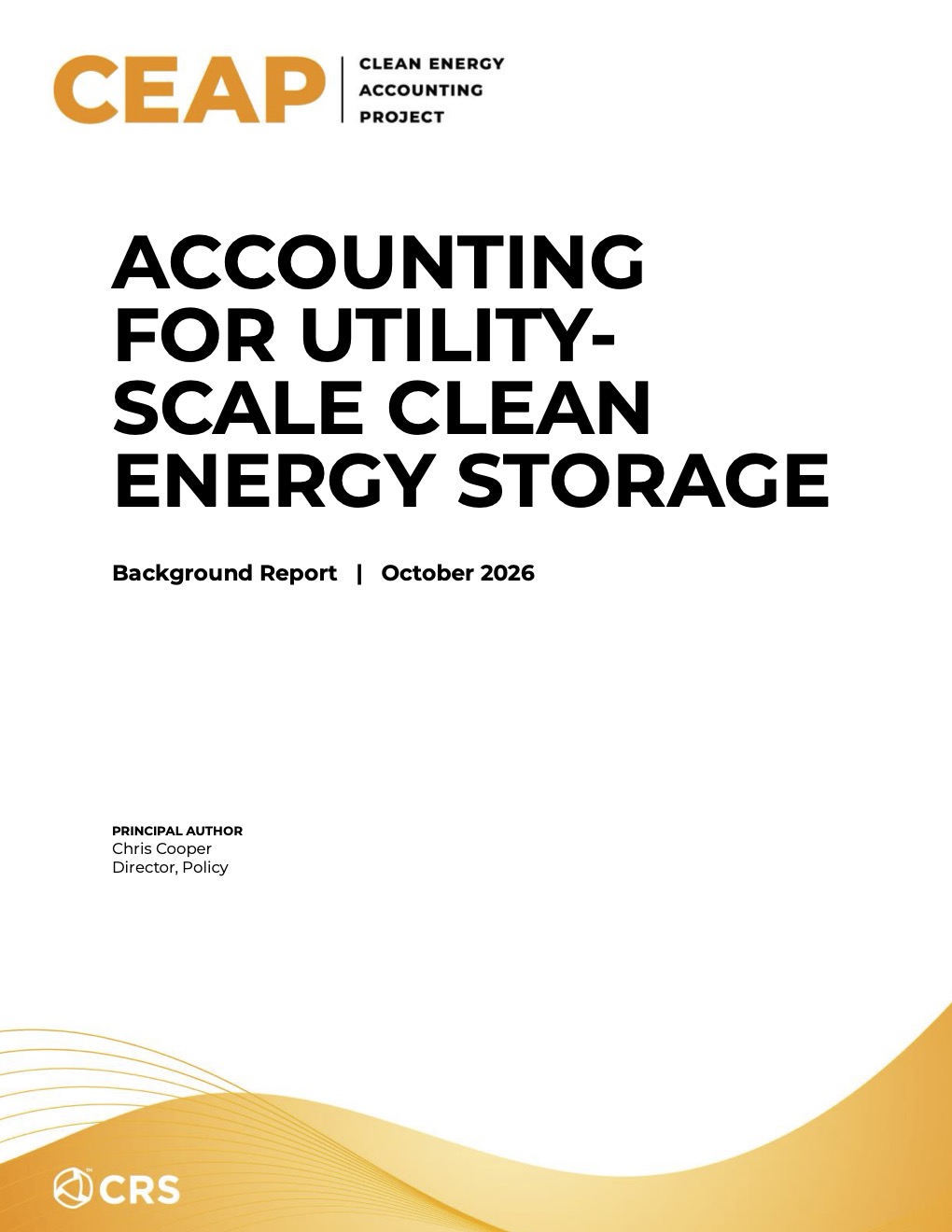
Accounting For Utility-Scale Clean Energy Storage Backgrounder
Utility-scale electricity storage is expanding rapidly and becoming integral to grid operations, renewable energy integration, and corporate decarbonization strategies. It enables the time-shifting of electricity supply, enhances the value of variable renewable generation, and supports system reliability. But storage also decouples the timing of generation, consumption, and delivery; introduces conversion and auxiliary losses; and is often operated under complex dispatch regimes that existing attribute-tracking and emissions reporting frameworks do not fully address. Without clear and consistent rules, storage can undermine the integrity of clean energy claims through attribute multiplication, temporal misrepresentation, double counting, and conflation of claim types.
This background report provides a baseline overview of existing and emerging methods for accounting for renewable electricity and associated emissions when energy is stored and later discharged from utility-scale storage systems. It introduces a taxonomy of three approaches (Storage-as-Load, Storage-as-Generation, and Storage-as-Transmission), applies it to principal voluntary and compliance frameworks developed since 2015, and reviews accounting for co-located and directly connected storage. The report is a deliverable from CRS’s Clean Energy Accounting Project (CEAP) Working Group on Accounting for Utility-Scale Clean Energy Storage, and is intended as a foundation for developing consensus guidance on stored clean energy accounting.
Additional Resources
Working Group
- ACT Group
- AES
- AT&T
- Avista
- CAISO
- CleanCounts
- EPRI
- esVolta
- Goldman Sachs
- Gridify
- Low Impact Hydropower Institute
- NERA
- Private Equity Partners
- RMI
- Singularity
- STX
- Tierra Climate / Energy Storage Solutions Consortium
- WattTime
- Xpansiv